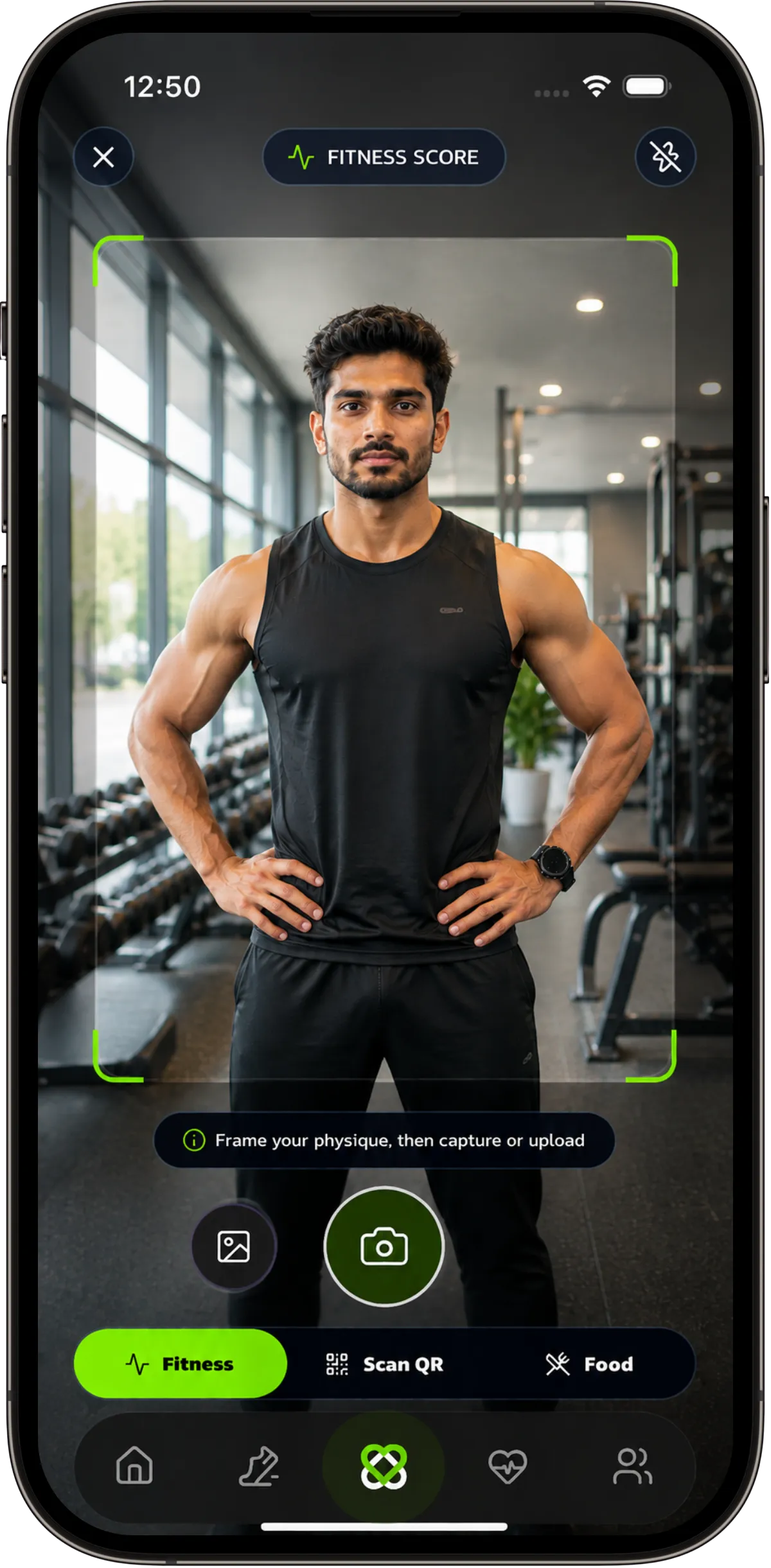


Most gym injuries in beginners do not come from lifting too heavy — they come from lifting a moderate weight with a technical fault that has been repeated for months. Fixing the fault matters more than adding load, and most faults trace back to one of seven recurring patterns.
1. Knees caving inward on squats (valgus collapse)
The knees drift toward each other as the weight gets challenging, usually from weak hip external rotators failing to control the femur. Fix: actively push the floor apart with your feet on the way up, as if tearing the floor in half — this cue alone corrects the pattern for most lifters without extra accessory work.
2. Squatting to a depth the hips cannot control
Chasing "full depth" past the point where the lower back rounds trades a bigger range of motion for a worse one. Fix: squat to the deepest point you can control without the pelvis tucking under (a "butt wink") — that depth, not an arbitrary parallel line, is your real range for now.
3. Rounding the lower back on hinge movements
On deadlifts and Romanian deadlifts, a rounding lower back shifts load from the hamstrings and glutes onto the spine. Fix: brace the core before the pull, push the hips back rather than bending forward, and stop the descent the moment you feel the stretch shift from hamstrings to lower back.
4. Half-range presses
Stopping a bench or overhead press a few inches short of full lockout, repeatedly, trains a partial range and leaves the triceps and stabilisers underdeveloped. Fix: use a lighter weight if needed, but complete the full range every rep — a controlled full range at lower weight builds more usable strength than a partial range at higher weight.
5. Bouncing the bar instead of controlling tempo
Using momentum — bouncing the bar off the chest, jerking a curl upward — replaces muscular tension with noise and raises injury risk under fatigue. Fix: a 2-second lowering phase on most lifts builds tension where it counts and makes cheating obvious to spot in the mirror or on video.
6. Skipping the warm-up set
Going straight to a working weight with cold joints and an unrehearsed movement pattern is a common, easily fixed cause of tweaks. Fix: two to three warm-up sets at increasing weight before your first working set — the last warm-up should feel like a rehearsal, not a workout.
7. Wandering bar path on the bench press
The bar should travel in a slight diagonal line from over the shoulders down to the lower chest, not straight up and down. A bar path that drifts toward the face wastes shoulder stability and reduces the load your chest actually handles. Fix: unrack the bar over your shoulders, not your eyes, and lower it toward the sternum, not the neck.
Move well, then move more.
None of these seven fixes require new equipment — they require attention on the reps you are already doing. score.fit's AI health scan can flag posture and movement-pattern cues from your camera between sessions, giving you a second reference point beyond your own filmed sets when you are checking whether a fix has actually stuck.