

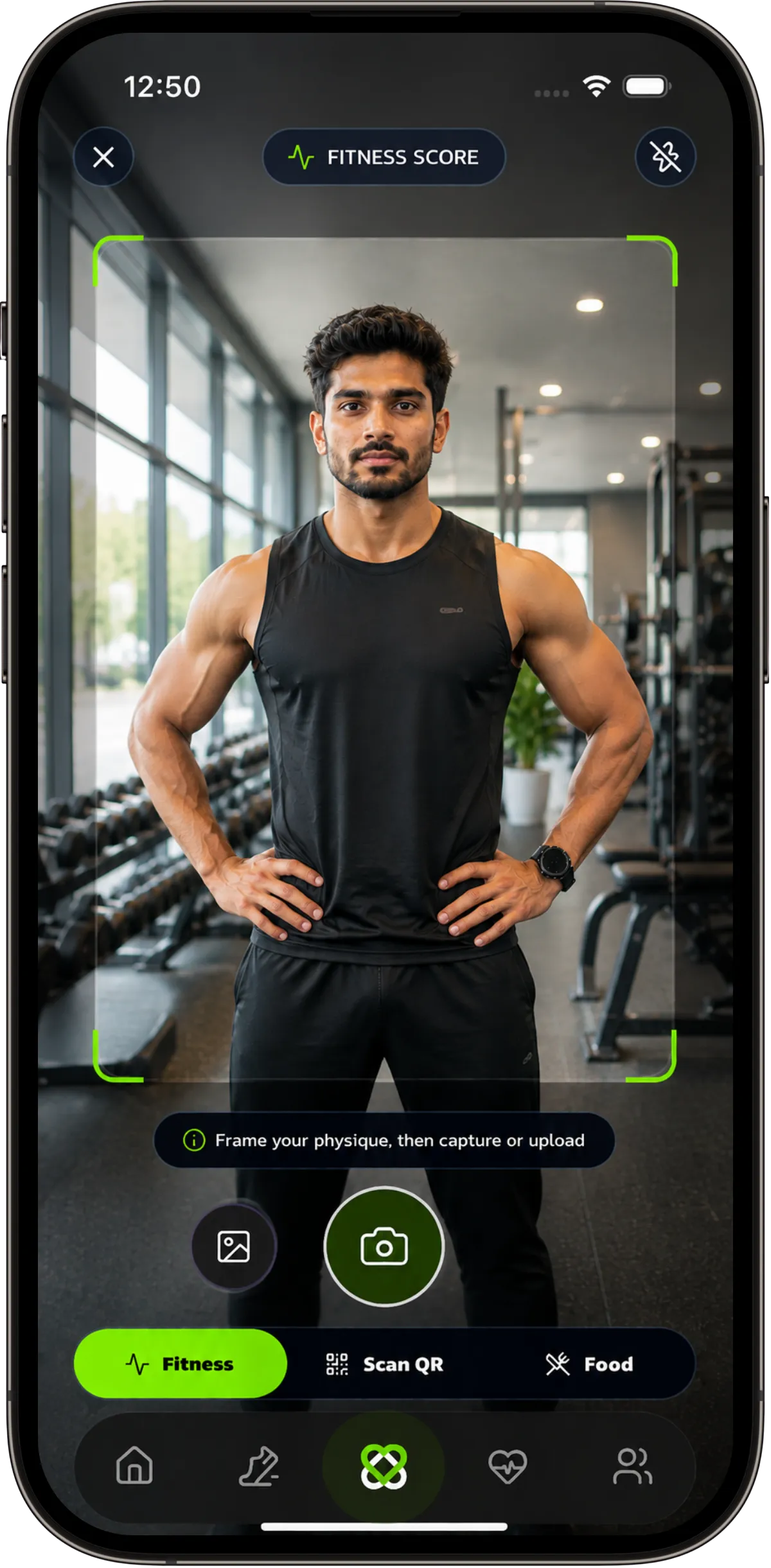
Steps, calories burned, resting heart rate, sleep hours, gym streaks — most fitness apps hand you a wall of numbers and leave you to decide what any of it means. Someone three weeks into a new gym habit in Bengaluru or Pune is not short on data; they are short on a single answer to "is this actually working?" A fitness score exists to solve that specific problem: it takes signals that do not mean much on their own and compresses them into one number that moves when your health actually moves. It is not a replacement for the underlying data, it is a way to read it at a glance.
What a fitness score actually measures
Most fitness scores you will run into are a composite of body composition, strength, cardio capacity, and mobility, adjusted for age and sex — cardio-training tools like Strava build theirs from effort and power data logged over weeks, while general wellness apps often lean on BMI, resting heart rate, and endurance tests. What they share is the same underlying idea: take signals that do not mean much in isolation and combine them into one number that reflects capability over time, not a single reading.
score.fit's score follows that same composite logic but starts from a different input. Instead of a wearable feeding it heart-rate or power data, it opens with an AI-read camera scan, then moves with logged workouts, nutrition, and consistency over time — not a single fixed formula or weighting the app publishes, since your starting point and your habits are both individual.
How score.fit builds your baseline
Before your score can move, it needs a starting point. score.fit builds that baseline with a camera-based AI scan — point your phone, and the app reads posture, movement patterns, and recovery signals without a wearable or a clinic visit.
- Posture and stance cues you would otherwise only get from a physiotherapist
- Recovery and readiness signals you can act on the same day
- A starting score you can watch move as your habits change
What moves your score up or down
From the baseline, three things keep the number current: workouts, nutrition, and consistency. Logging a coach-built session or tracking your own sets and reps moves your health score in step with the activity you actually complete — no activity logged, no movement in the score. Meals logged through the AI food scan (a photo, not manual entry) round out the picture with calories and macros. Goals and streaks add the time dimension, since a score built from one good week and a score built from eight consistent weeks should not look the same.
score.fit's Features page breaks each of these inputs down individually — the AI health scan, the food scan, and workout logging — if you want to see how a single input behaves before committing to the app. Free vs. score.fit Plus tiers, and exactly what each includes, are listed on the Pricing page.
Fitness score vs. a fitness tracker
A tracker logs raw data — steps taken, heart rate, hours slept. A fitness score interprets that data and hands you a single, moving number instead of five separate charts to cross-reference yourself. Think of a tracker as the instrument panel and a score as the one dial you actually check every morning. We will go deeper on this comparison — including where a tracker alone is still the better tool — in a dedicated piece.
How to check your fitness score
Download score.fit, run the camera-based baseline scan to get your starting number, then log your first workout or meal scan. The score updates from there — check the Goals & Progress view any time to see the current number alongside your streak and trend line, not just a single snapshot. A first-week number will move faster than a tenth-week number, simply because early logged activity is a bigger share of your total history — that is normal, not a sign the score is unstable.
FAQ
A fitness score is only useful if the number is honest. Run your baseline scan, log what you actually do, and let the trend line — not a single day's reading — tell you whether it is working.